Resources / Essay
Seven days, one bad ankle, four lessons for founders.
Planning, determination, resilience, and the hardest one: accepting what you can't control.
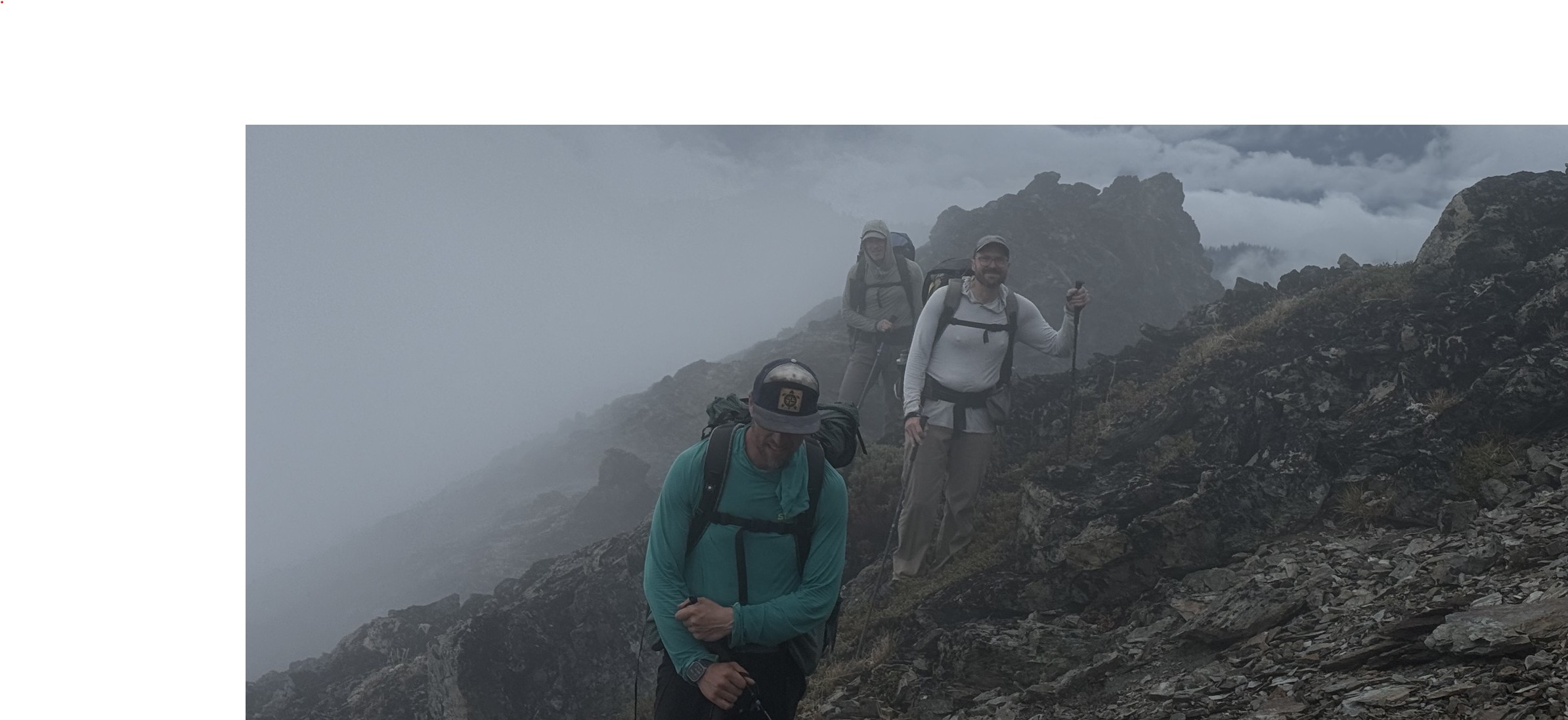
Every year I take one big backcountry trip. It's the hardest thing I do for my body and the most important thing I do for my mental health. For fifteen years I've made that trip with co-founders and early employees from my first company. We haven't worked together in a long time, but we still walk together.
This year we spent seven days in Olympic National Park. On day two, while crossing a steep and frightening rockfield, I hurt my ankle. It never fully recovered. I walked the remaining five days on it, and I'm still limping.
The ankle wasn't the only thing I carried. I brought some emotional weight into the wilderness, and at a few key moments it pulled my concentration away exactly when I needed it most.
Somewhere in those five days it became clear to me that what gets you through a hard trip is what gets a founder through building a healthcare company. Both environments are unforgiving, and four skills matter in both.
Planning is what you carry. In the wilderness you have only what's on your back. Food, water, first aid, and a bailout route are all decided before you reach the trailhead. Building a company works the same way. A recent CB Insights analysis of 431 failed VC-backed startups found that 70% ran out of capital, but that was usually the final cause of death rather than the root problem. Plan with honest assumptions, and know your bailout route before you need it.
Determination is a daily decision. Nobody walks five days on a bad ankle on inspiration. You get up each morning and walk the miles in front of you. Healthcare demands the same discipline. Slow sales cycles remain the biggest barrier to growth for digital health companies, according to Modern Healthcare's annual Digital Health Survey. The summit is rarely in view, so walk today's miles.
Resilience is recovery speed. The rockfield wasn't the hardest part. The hardest part came afterward, in the moments when my head wasn't where my feet were. Founders know this feeling well. In one study of 242 entrepreneurs, 72% were affected by mental health conditions, either personally or through their families. Resilience doesn't mean you never struggle. It means you notice when your focus has slipped, you bring it back, and you have people around you who notice too.
Acceptance is the hardest skill. The wilderness doesn't care about your itinerary. My ankle wasn't going to heal on the trail, so the only real question was how to finish with it. In healthcare, a policy change or a payer decision can reset your pipeline overnight. I learned that firsthand when a federal program our business model depended on was eliminated. Bad timing appears in 29% of those failed-startup post-mortems, and much of it sits outside any founder's control. You can't control the weather. You can control how quickly you reforecast, how honestly you tell your board, and how you adjust the route.
The team is what gets you out. Fifteen years of these trips have taught me the real lesson. I didn't finish because I was tough. I finished because of the people I was walking with. We built a company together, and a decade and a half later we still show up for each other. That's the belief behind Crucible Health: in an unforgiving environment, the team is the only durable advantage.